

Air Monitoring Services

Air Monitoring
Oracle Environmental offer a range of indoor and ambient air quality monitoring services for a variety of industries and business sectors including manufacturing, fabrication, warehousing and logistics, as well as the environmental insurance sector.
Our staff work with clients to identify their key requirements, design and implement the monitoring strategy, and provide detailed reporting throughout an air monitoring programme to ensure compliance with relevant legislation and to communicate with key stakeholders.
Workplace Exposure Assessments
Oracle Environmental offer a comprehensive workplace exposure assessment service for employers where their employees may be exposed to a variety of aerosols including dusts, fumes, gases and mists to ensure compliance with the workplace exposure limits (WELs) set out in the COSHH regulations.
Our trained and experienced staff regularly carry out work with a range of clients where we identify the scope of the monitoring, carry out site monitoring, and provide detailed reporting including results, observations and any recommendations to control exposure further if appropriate.

When carrying out these assessments, we follow the relevant methodologies and guidance set by the HSE (e.g. MDHS 14/4 and HSG 173) and use the appropriate sampling equipment (e.g. personal occupational sampling equipment).
We work with clients in a range of industries such as:
Manufacturing including metal fabrication and wood workshops
Recycling
Warehousing and logistics
Assessing exposure to aerosols such as:
Fumes including volatile organic compounds (VOCs)
Dusts including metals (e.g. chromate, beryllium) and wood dusts
Fibres including asbestos
Indoor Air Quality
At OEE we also offer a range of indoor air quality monitoring for indoor areas that do not fall under the remit of COSHH such as offices, schools, residential properties and other public places.
We work with clients to scope out the monitoring whether that be in relation to complaints from occupants (e.g. relating to potential pollution sources), to identify their key requirements, design and implement the monitoring strategy, and provide detailed reporting referring to the most appropriate guidance and indoor air quality guideline values.
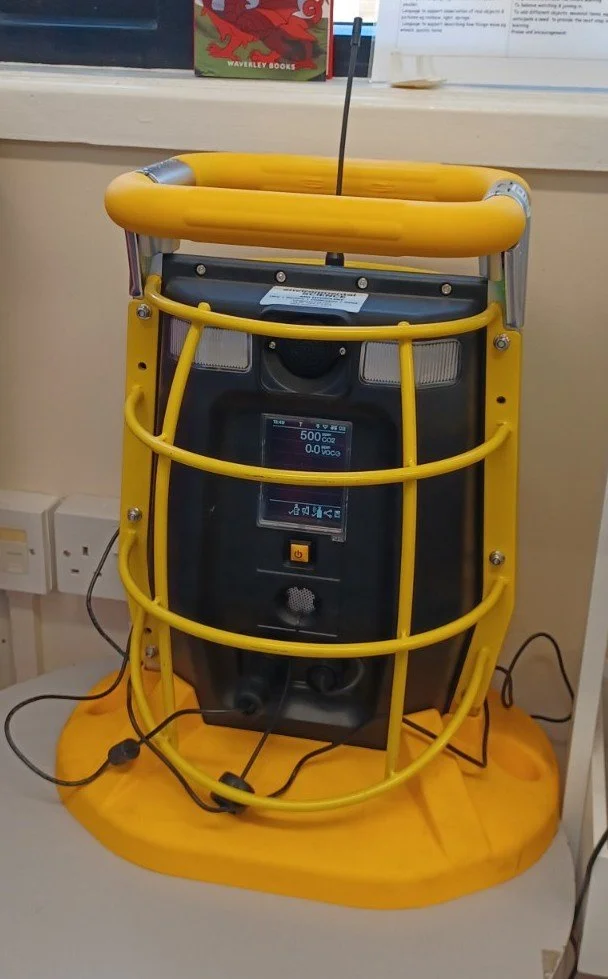
We typically spend around 90% or more of our time indoors so indoor air quality is critical for our health and wellbeing. Several factors can impact indoor air quality including outdoor air pollution as well as items in our home (i.e. products and furnishings) and our own activities (i.e. cooking)
Key services include:
Assessing impact from refurbishment works including Particulate Matter (PM), volatile organic compounds (VOCs) and gases.
Indoor air quality testing for TVOCs and formaldehyde.
Assessing ingress of pollutants from traffic, industry or spills.
Assessing impacts from historic uses of a building or land including ground gases.
Assessing impacts on air quality from a pollution incident.
Case Study - Air Monitoring for Hexavalent Chromium
Background
Oracle Environmental Experts were instructed by a client who specialises in the remediation of hazardous substances, to undertake verification of the removal of hexavalent chromium (Cr(VI)) following decontamination works at a building used for the application of primer paints to marine airframes of rotary wing aircraft.
The client required the building to be safe to enter without respirators or PPE so that operatives could undertake maintenance works before returning the site to its previous use.
Verification Works
Verification was undertaken by Oracle using two methods, including air sampling and surface swab sampling. Surface swab samples were taken from a 10 cm x 10 cm area of surface using sampling media which were placed in sealed bags prior to dispatch to an independent laboratory for analysis of the contaminant of concern.
Pumped air samples were collected using an appropriately calibrated air pump and sampling media. The samples were collected in accordance with guidelines stipulated by the HSE.
Samples were dispatched to an independent laboratory for analysis of the contaminant of concern. Sampling was undertaken over a nine-month period in conjunction with a decontamination schedule stipulated by the client.
Outcome
For air samples, results were compared to Workplace Exposure Limits (WELs) for Cr(VI) set out by the HSE in document EH40/2005. For surface swabs, results were compared to results in the relevant peer reviewed literature.
Oracle were able to provide a robust verification methodology allowing our client to undertake decontamination works to a high standard and to allow extensive refurbishment works to be undertaken on a key asset in a timely and efficient manner.
Key Contacts
-

David Newton
Senior Environmental Consultant
E: dnewton@oracle-environmental.com
-

Dr. Jon Burton
Managing Director
E: jburton@oracle-environmental.com